Half-moon
The Half-moon is a celestial location that appears in the terrifying folklore surrounding the Sandman, a figure who haunts the childhood of Nathaniel. In the story told by the old woman who cared for Nathaniel's youngest sister, the Sandman is a bad man who comes to children who refuse to sleep, flings sand into their eyes until they bleed, then carries them off in his bag to the Half-moon to feed his own children. Those children, she said, sit in a nest on the Half-moon with crooked beaks like owls, with which they pick out the eyes of naughty human children. This gruesome image takes firm hold of Nathaniel's childish imagination, and despite his later realization that the tale cannot be true, the Half-moon remains entrenched in his mind as a place of horror associated with the Sandman.
Origin in Childhood Folklore
The Half-moon enters the story through the nanny's response to young Nathaniel's persistent questions about the Sandman. After his mother dismisses the Sandman as a mere expression for sleepy children, Nathaniel turns to the old woman who cares for his youngest sister. Her answer is far more vivid and terrifying: the Sandman flings sand in children's eyes, causing them to scratch themselves bloody, then carries them to the Half-moon, where his children with owl-like beaks peck out the eyes of the naughty human brats. This narrative transforms the Half-moon from a natural celestial body into a site of mutilation and punishment, a destination for stolen eyes. The image becomes so powerful that Nathaniel, even after he is old enough to know the story cannot be true, continues to associate the Sandman with a hair-raising spook that grips him with dread and terror.
Connection to Coppelius and Trauma
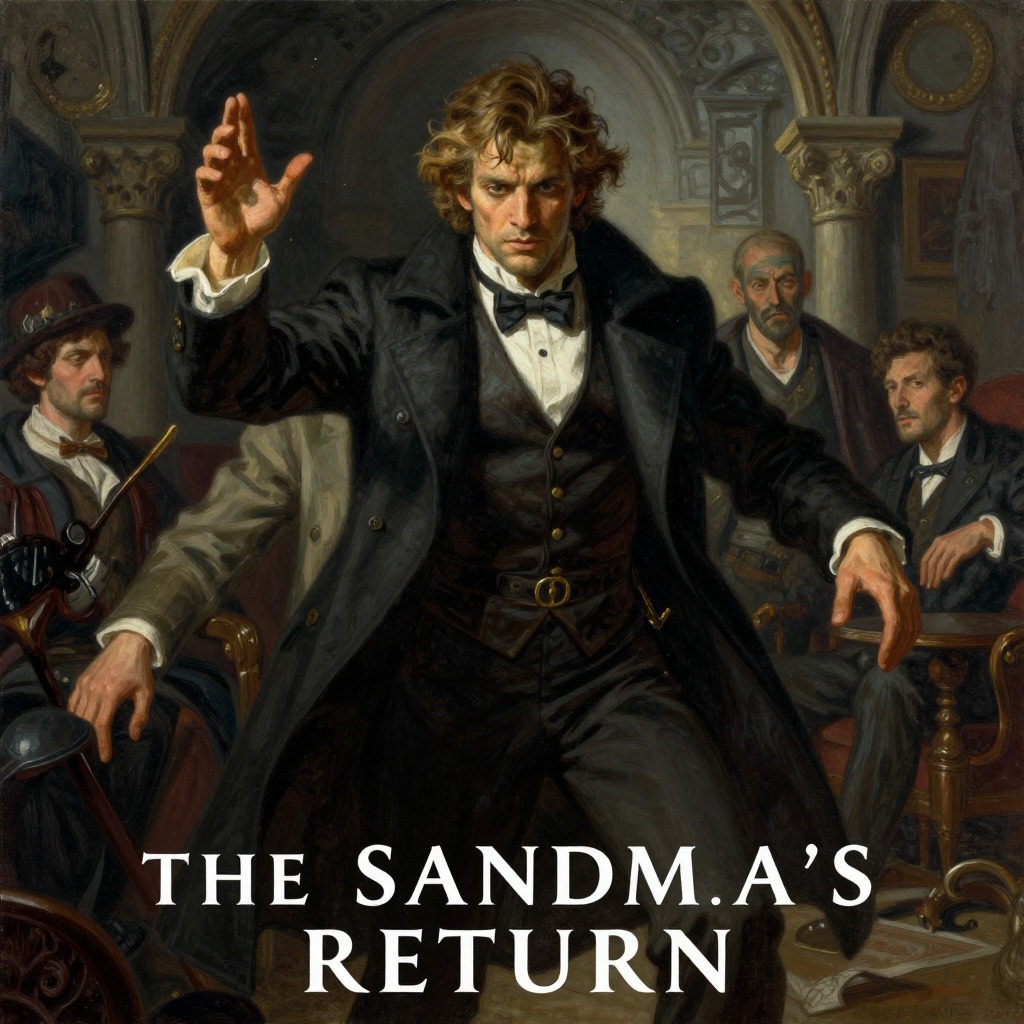
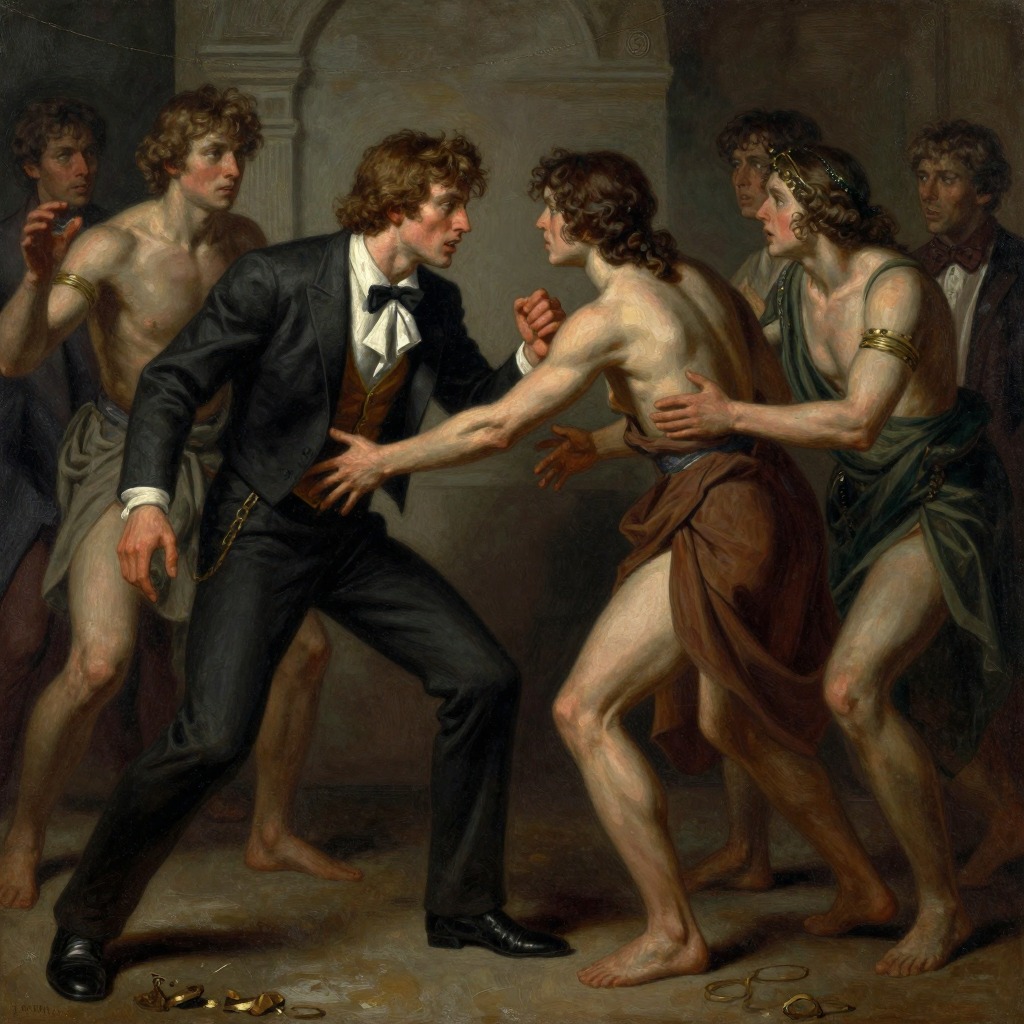
The Half-moon's significance deepens when Nathaniel, hiding in his father's study, discovers that the Sandman is actually the barrister Coppelius. In the hidden laboratory, Coppelius works with Nathaniel's father over a blue flame, and Nathaniel sees human faces without eyes—dreadful, deep, black hollows where the eyes ought to be. Coppelius then cries out "Eyes out, eyes out!" and grabs Nathaniel, threatening to strew glowing cinders in his eyes. This scene directly echoes the nanny's tale of eyes being taken to the Half-moon, linking the celestial location to the real trauma of Coppelius's assault. The Half-moon thus becomes not merely a folkloric destination but a symbol of the threat to Nathaniel's own eyes, a threat that nearly materializes when Coppelius seizes him and his father pleads for his son's sight.
Resurgence in Madness
The Half-moon imagery resurfaces during Nathaniel's descent into madness. After the revelation that Olympia is a lifeless automaton, Nathaniel, driven insane, cries out about a "ring of fire" and later, on the tower, screams "Ring of fire, turn! Ring of fire, turn!" before leaping to his death. While the Half-moon itself is not explicitly named in these final scenes, the ring of fire recalls the blue flame of Coppelius's hearth and the spinning circle of fire from Nathaniel's poem, where Coppelius flings him into a flaming circle that spins at the speed of lightning. The Half-moon, as the destination of stolen eyes, is thus part of a constellation of images—eyes, fire, the Sandman, the automaton—that converge in Nathaniel's final psychotic break, culminating in his suicide on the cobblestones below the tower.
Thematic Significance
The Half-moon functions as a key element in the story's exploration of the boundary between childhood fantasy and adult trauma. It originates in a folk tale that Nathaniel knows to be false, yet it retains its power to terrify because it becomes attached to the real figure of Coppelius. The Half-moon is never seen or visited; it exists only as a narrated destination, a place that exists in the imagination but has no physical reality. This makes it a perfect symbol for the dark forces that Clara and Lothar argue are merely phantoms of Nathaniel's own mind—forces that have power only because Nathaniel believes in them. The Half-moon, like the Sandman himself, is a projection of inner terror onto the external world, a celestial body that becomes a repository for childhood fear and adult madness alike.